
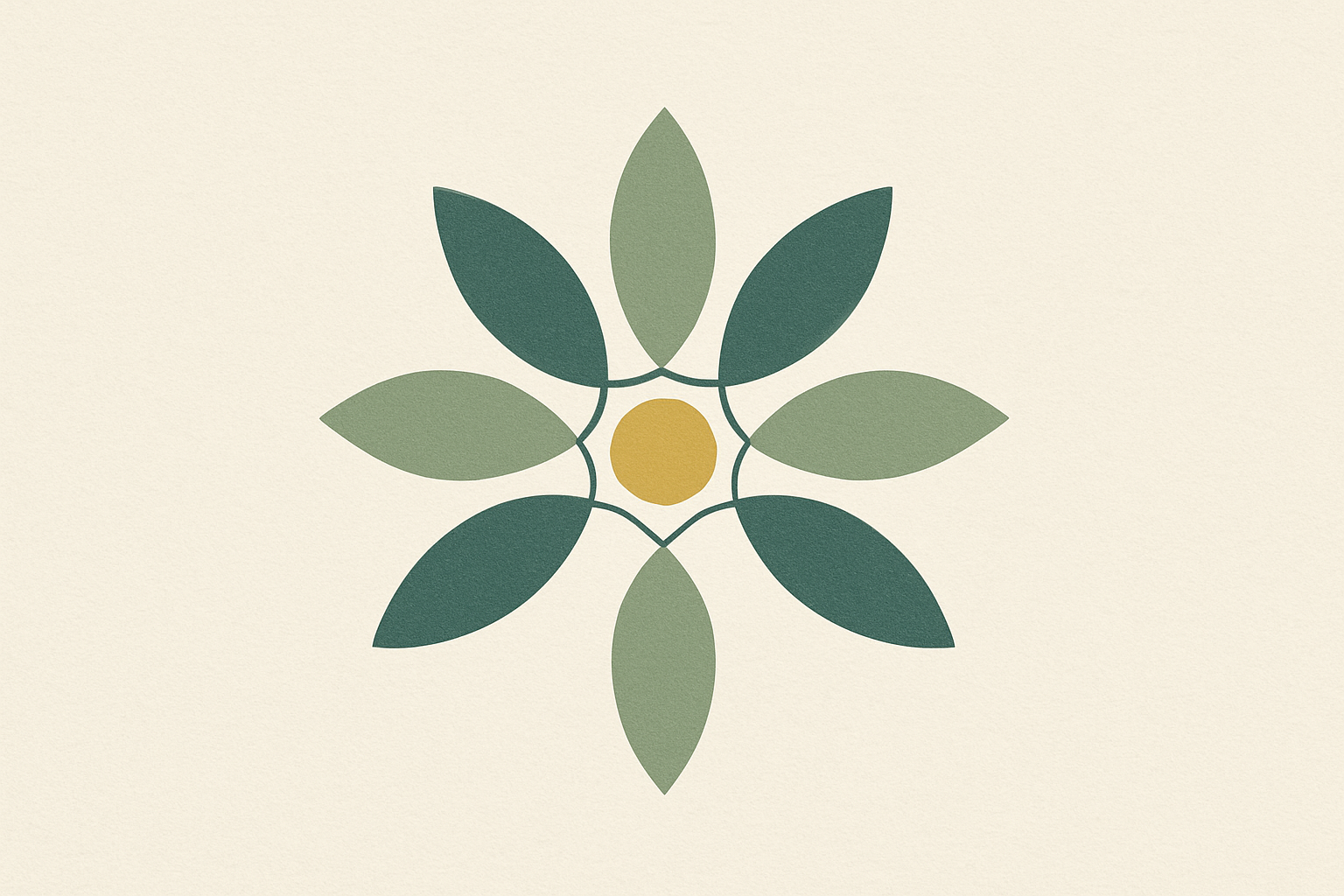
Wellbeing is bigger than any single symptom. When something feels off, it’s natural to look for the one thing to fix, the single cause we can name and deal with. But health rarely works that neatly. How you feel on any given day is the sum of many parts, and those parts are deeply connected.
A helpful way to see the whole picture is across eight connected dimensions of wellbeing. None matters more than the others, and each one quietly influences the rest. Looking at them together, rather than in isolation, is what makes lasting change possible.
This isn’t about adding more to your to-do list. It’s a gentler, clearer way to understand yourself, so you can put your energy where it will actually make a difference.

Why single-symptom thinking falls short
Modern health advice often treats us as a collection of separate problems to be solved one at a time. Tired? Here’s a supplement. Stressed? Here’s an app. Each piece of advice can be useful, but on its own it misses how much these things feed into one another.
When you only ever treat the symptom in front of you, it’s easy to end up playing whack-a-mole, fixing one thing while another quietly slips. A whole-person view steps back far enough to see the pattern, which is usually where the real answers are.
None of this means the specific advice is wrong. A supplement, an app or a workout can each be genuinely helpful. It’s simply that they work best as part of a bigger picture, chosen because they fit how your life actually connects, rather than reached for at random whenever a new symptom appears.
The eight dimensions of wellbeing
Here is a simple way to hold the whole picture in mind. As you read, notice which ones feel strong for you right now, and which give you pause.
- Emotional: building awareness, resilience and healthy ways to process how you feel.
- Physical: movement, nutrition, sleep and energy, the foundations everything else builds on.
- Social: relationships and a sense of community that genuinely support you.
- Occupational: purpose and balance in the work you do and how it fits your life.
- Intellectual: staying curious, engaged and mentally sharp.
- Environmental: surroundings, at home and beyond, that support rather than drain you.
- Financial: easing the everyday stress that money worries can bring to your health.
- Spiritual: connecting with what gives your life meaning and a sense of calm.
You’ll notice that only a couple of these are strictly medical. That’s the point. Your health lives inside your whole life, not just in a set of test results, and the parts we don’t usually think of as “health”, like work, relationships and environment, often shape how we feel just as powerfully.
A closer look at each dimension
Emotional wellbeing is about noticing what you feel and having healthy ways to work through it, rather than bottling things up until they spill over. It grows through small habits like naming your feelings, talking honestly with someone you trust, and giving yourself permission to rest.
Physical wellbeing is the foundation the rest tends to build on: how you move, eat, sleep and recover. When the physical basics are steady, almost everything else becomes easier to manage, which is why it’s often the most rewarding place to start.
Social wellbeing comes from relationships and community that genuinely support you. A single good conversation can lift a whole week, and feeling connected is one of the strongest influences on how well we cope with everything else.
Occupational wellbeing is about purpose and balance in your work, paid or unpaid. It isn’t only about loving your job. It’s about feeling that what you do has meaning, and that it fits your life rather than swallowing it whole.
Intellectual wellbeing is the part of you that stays curious and engaged. Learning something for its own sake, following an interest, or simply giving your mind something nourishing keeps you feeling alive and capable.
Environmental wellbeing is shaped by your surroundings, at home and beyond. Light, order, nature and calm all quietly affect your mood and energy, and small changes to your space can pay you back every single day.
Financial wellbeing is less about how much you have and more about the stress that money worries can bring. Even small steps toward clarity and control can ease a background hum of anxiety that affects sleep and health.
Spiritual wellbeing is your sense of meaning and calm, however you find it. For some that’s faith, for others it’s nature, music or quiet reflection. It’s the part that helps everything else feel like it adds up to something.

Why the connections matter
The value of this view isn’t in the categories themselves, it’s in the connections between them. Poor sleep can flatten your mood, which makes movement feel harder, which drains your energy, which makes work more difficult, which adds stress that harms your sleep. The chain runs in every direction, and it’s easy to get stuck in a loop.
The same connections work in your favour, though. Improving one area often lifts several others at once. A steadier sleep routine can quietly improve mood, focus and appetite together. A single good conversation can ease stress that was affecting your whole week. This is why small, well-chosen changes can have a much bigger effect than they first appear.
You don’t have to fix everything
The point isn’t to score highly in all eight at once. That would be exhausting, and it isn’t the goal. Some dimensions will always ebb and flow with the season of life you’re in, and that’s completely normal.
Instead, the aim is simply to notice which areas feel strong right now and which could use a little care, then start where it matters most to you. Often, a small improvement in one area quietly lifts the others with it, and the whole picture begins to feel lighter.
How to use this in practice
Try a gentle self-check. Read back through the eight dimensions and, without overthinking it, notice which two feel most solid and which two you’d most like to nurture. There are no wrong answers, and the ones that give you pause are simply good places to begin a conversation with yourself.
Then choose just one small, kind action in the area you’d like to nurture. Not a grand plan, just a first step you can actually take this week. Because everything is connected, that single step tends to ripple outward further than you’d expect.
If it helps, write your one small action down and put it somewhere you’ll see it. Making it visible turns a good intention into something you’re far more likely to follow through on, and keeps the whole idea from staying stuck in your head.
Start with what’s easiest, not what’s hardest
When we decide to improve our wellbeing, we often aim straight at the hardest thing, the area that feels most broken. That’s admirable, but it can also be discouraging, because the hardest area is usually the one with the most resistance around it.
Because everything is connected, you don’t have to start there. A win in an easier, more enjoyable area often builds the momentum and steadiness that make the harder areas feel approachable later. One small success makes the next one more likely. Progress, not perfection, is what moves the whole picture forward.
When one area is really struggling
Sometimes one dimension isn’t just a little low, it’s genuinely hard. Money worries can become overwhelming, low mood can settle in, or a relationship can leave you drained. When that happens, the whole-person view still helps, because it reminds you that you’re not failing at everything, you’re carrying something heavy in one particular area.
It’s also a signal that support might help. This way of working sits alongside, not instead of, medical or professional care, and part of looking at the whole picture is recognising when a particular area calls for more specialised help. Reaching for that isn’t a weakness. It’s exactly the sort of clear-eyed choice this way of thinking is meant to encourage.
Revisit it now and then
Your wellbeing isn’t fixed, and neither is this picture. The dimension that feels strong today might need care in a few months, and the one you’re nurturing now may quietly become a strength. That’s not a sign of going backwards, it’s simply life moving through its seasons.
Coming back to these eight areas every so often, perhaps at the turn of a season, gives you a gentle way to check in with yourself. Not as a test to pass, but as a quiet moment to notice what’s changed and where a little attention might help next.
How we work this way at Vitalife
This whole-person view sits at the heart of how we work. We look at how the pieces fit together rather than treating them in isolation, so support in one area never comes at the expense of another. Evidence-led testing tells us what’s happening physically, and coaching helps you make sense of the rest, at a pace that suits your life.
If you’d like to explore where you might begin, our free wellness guide is a calm, practical place to start, or you can get in touch for a no-pressure conversation.